

What should you check importantly before deciding on lens implantation surgery cost?

Two Branches of Refractive Error Solution Methods
After experiencing vision deterioration, corrective surgery is essential to restore it. Refractive correction approaches are broadly divided into two types: one is the method of removing corneal tissue with laser, and the other is the method of implanting an artificial lens inside the eye. In this article, we will examine the differences between these two approaches and cover the key items that must be checked before receiving a lens implantation surgery cost estimate.
Mechanism of Artificial Lens Implantation

The lens implantation method is a procedure that improves myopia by placing a corrective lens inside the eye. Similar to glasses, a lens with refractive power matching the patient’s vision is placed in the area between the iris and the natural lens. This way, the light rays passing through the lens focus accurately on the retina, correcting vision.
Since it is a structure that places the lens inside the eye without touching the cornea, there are no corneal thickness constraints. Moreover, it has the advantage of being applicable even when the degree of refractive error is severe. The procedure takes approximately 20-30 minutes, and recovery is relatively rapid.
Comparison Between Corneal Ablation and Lens Implantation
The most distinct comparison point between laser correction and lens implantation is the surgical approach method. Laser correction changes the refractive angle by shaving down the cornea, while lens implantation inserts a corrective lens into the eye to induce image formation on the retina. Thanks to this structural difference, even patients with ultra-high myopia or excessively thin corneas who find general laser correction difficult can restore vision through lens implantation.
Another notable comparison point is reversibility. Once laser correction is performed, there is no way to reverse it to its original state. On the other hand, with lens implantation, if discomfort or abnormal signs appear after surgery, the lens can be removed to return to the original state.
Due to these characteristic differences, lens implantation surgery cost is set differently from laser correction, and generally ranges between 3 million won to 5 million won. Since the amount includes surgery fees, examination fees, lens costs, and aftercare costs, you should carefully check the detailed items when receiving an estimate.
Necessity of Endothelial Cell Density Evaluation
Before receiving a lens implantation surgery cost estimate, a corneal endothelial cell density examination must be conducted. The corneal endothelium corresponds to the deepest layer of the cornea. This tissue is in contact with the body fluid involved in maintaining eye shape and is responsible for the pump function that discharges absorbed moisture back out. For the corneal endothelium to perform its role, a minimum of 2,000 endothelial cells per eye is necessary.
When the number of endothelial cells falls below 2,000, the pump function weakens. If the endothelium cannot properly discharge moisture, swelling occurs in the cornea. If the edematous state is left untreated for a long time, the cornea loses transparency and becomes cloudy, damaging vision.
Therefore, the procedure of precisely measuring the number of endothelial cells before surgery and confirming that a sufficient number is secured is very important. Depending on the examination results, the feasibility of the procedure is determined, and some hospitals charge separately for this examination cost.
Anterior Chamber Depth Measurement and Lens Placement
Lens implantation is broadly divided into two types depending on where the lens is placed. In the past, anterior chamber implantation, which places the lens in front of the iris, was mainstream, but nowadays posterior chamber implantation, which places the lens behind the iris, is performed more often.
Posterior chamber implantation secures physical distance from corneal endothelial cells, so it has less impact on endothelial cell reduction. Also, since the lens is not noticeable from the outside, it is advantageous cosmetically. However, since the lens must be inserted inside the iris, there must be sufficient space inside the eye.
If there is insufficient space inside the eye, there is a risk that the lens will collide with surrounding tissues and cause problems. Therefore, before confirming lens implantation surgery cost, you should determine the anterior chamber depth through precise measurement and judge whether posterior chamber implantation is a possible structure. Since there may be price differences depending on anterior and posterior chamber methods, it is wise to first determine which method suits you.
Harmony of Iris Diameter and Lens Specifications
In the past, there were cases where intraocular pressure rose after lens implantation, triggering glaucoma or cataracts. In our eyes, there is a body fluid called aqueous humor that supports eye shape and supplies nutrition and oxygen. When lens implantation blocks aqueous humor circulation, intraocular pressure rises. Recently, drainage pathways are pre-drilled in lenses to block intraocular pressure elevation.
However, even if the lens has a drainage port, if the lens specification is larger than the iris space, the iris’s natural drainage port can be blocked, causing intraocular pressure to rise. Therefore, from the beginning, the iris diameter must be precisely measured and a lens specification matching it must be selected.
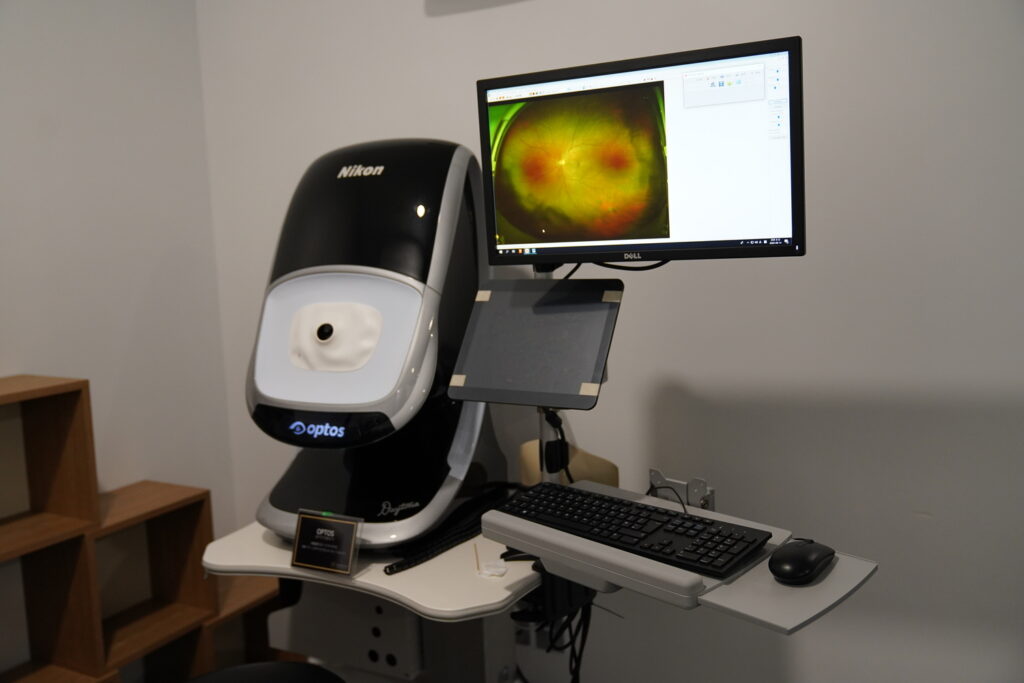
Iris diameter measurement is performed with special equipment, and based on this data, the most suitable lens specification for the patient is determined. If the lens size is inappropriate, complications can occur after surgery, so this step can never be skipped.
Lens implantation surgery cost differs depending on the type and specification of lens selected. Some hospitals present a price that includes all examination fees and regular follow-up observation costs, while some only specify the surgery fee and charge the rest additionally. Therefore, after confirming the lens you need through precise examination, it is good to compare estimates from multiple hospitals and make a reasonable decision. While cost is important, above all, choosing a surgeon with accurate examination and rich experience is the shortcut to safe and satisfactory results.
If you would like to know more about lens implantation surgery, please visit our website!
https://www.gseyecenter.com/vc/02_02/